
Headlight Restoration:
The Definitive Guide
Everything you need to know before you restore your headlights — why they haze, what actually works, cost, how long it lasts and why the sealant step matters more than the sanding. Written by the Houston studio that lives and breathes it.
What Is Headlight Restoration — and Why Do Headlights Turn Yellow?
Modern headlight lenses aren't glass — they're polycarbonate plastic with a factory-applied UV-resistant clear coat. Houston sun breaks that coat down over years of exposure, and once it's gone the bare polycarbonate underneath oxidizes: it turns yellow, hazy and cloudy. Headlight restoration is the process of removing that damaged layer, polishing the plastic back to optical clarity, and sealing it with a new UV-resistant coating so it doesn't just haze right back over.
It's UV damage, not dirt
The clouding isn't grime sitting on top — it's oxidized plastic. No amount of wiping or washing removes it; the damaged layer has to be sanded away.
A skin, not the lens
Under that yellow haze the polycarbonate itself is usually fine. Restoration works on the surface layer — it doesn't replace the headlight.
The seal is the point
Polishing alone looks clear for a few weeks. A proper UV-resistant sealant is what makes the clarity actually last.
Why Hazy Headlights Are a Safety Issue, Not Just a Look
It's easy to write off yellow headlights as a cosmetic annoyance. They're not — oxidized lenses genuinely change how much light reaches the road, and that has real consequences.
Real light loss
Heavily oxidized lenses can block a large share of usable light output and scatter what does get through — dimmer beams and more glare for oncoming drivers, right when you need visibility most.
A genuine night-driving hazard
Reduced, scattered light means shorter reaction time to spot pedestrians, animals and stopped traffic after dark or in Houston rain. This is a safety issue, not a vanity one.
Failed inspections
Cloudy, yellowed lenses can fail a Texas state inspection outright, which stalls your registration until it's fixed.
Tired, dated look
Hazy lenses age a car faster than almost anything else on the front end — even a clean, well-kept vehicle looks neglected.
Compounding damage
Left long enough, deep oxidation and UV exposure can lead to cracking, letting moisture into the housing and causing bigger, costlier problems.
The Benefits of Headlight Restoration
Real, measurable brightness
Removing the oxidized layer restores clarity so light exits the lens the way it was designed to — properly focused, not scattered into glare.
Pass inspection
Clear lenses meet the visual standard Texas inspectors check for, so a hazy pair doesn't hold up your registration.
A fraction of replacement cost
New OEM headlight assemblies can run hundreds to well over a thousand dollars each. Restoration gets you the same clarity for a fraction of that.
Fast turnaround
Most pairs are done in about 90 minutes — no waiting days for parts to ship or a bay to open up.
Instant curb appeal
Clear lenses are one of the highest-impact, lowest-cost changes you can make to how a car reads from the front.
The Stages of Restoration, Visualized
Same lens, four points in the process. Restoration doesn’t hide the haze — it physically removes the failed outer layer, then seals the fresh surface against Houston UV.
Oxidized factory coating scatters the light — dim beams, cloudy amber lens.
The failed UV layer is sanded away in progressively finer grits — uniform, but dull.
Compound and polish bring the polycarbonate back to optical clarity.
A fresh UV-blocking seal locks in the clarity — clear coat or clear PPF, your call.
The Restoration Process
This is where the cheap toothpaste-and-a-rag DIY hacks and drugstore kits fall apart. Real restoration is a multi-stage wet-sand and polish, finished with a sealant coat — skip that last step and you're back to hazy in weeks.
Mask & Protect
Surrounding paint, trim and badges are taped off so only the lens itself is worked — no risk to the panels around it.
Wet-Sand Through Grits
The oxidized layer is wet-sanded away using progressively finer grits, removing the damaged plastic without gouging the lens underneath.
Machine Polish
A machine polisher with a dedicated compound brings the sanded plastic back to full optical clarity — this is what separates a professional result from a hand-buffed one.
UV-Resistant Sealant Coating
Once the lens is polished clear, we apply a UV-resistant sealant that bonds to the plastic and rebuilds the protective layer the factory coat used to provide. This is the single biggest factor in how long the clarity holds — polishing without sealing is why cheap toothpaste-and-DIY jobs fade back to yellow in a matter of weeks.
Cure & QC
The sealant cures, we inspect together in daylight, and you get aftercare guidance. Most pairs are in and out in about 90 minutes.
Protect Your Restored Headlights
Restoration removes the haze — but Houston sun and highway debris will slowly bring it back if the lens is left bare. Before you leave our EaDo shop, seal the work one of two ways.
UV Clear Coat
A baked-on, UV-stable clear coat re-seals the lens and blocks the sunlight that causes yellowing in the first place. The smart-value finish — it restores and protects in one step and lasts far longer than a bare sanded lens.
Clear PPF Seal
A layer of clear paint protection film over the lens — the maximum, longest-lasting protection. It shrugs off rock chips, sandblasting and UV, self-heals light scratches, and can be peeled and replaced years down the road. The premium armor. More on PPF →
What Does Headlight Restoration Cost?
Priced per pair. Your exact price depends on a few things we'll confirm before you book — most jobs land close to the starting price.
Severity of oxidation
Light hazing takes less material removal than deep, years-long yellowing or early cracking.
Lens size & shape
Larger or more complex-shaped housings (common on trucks and SUVs) take more time to mask, sand and polish evenly.
Add-on protection
Pairing restoration with a longer-life ceramic topcoat instead of standard sealant is available if you want maximum longevity.
How Long Does Headlight Restoration Last?
Done right — full wet-sand, machine polish, and a proper UV-resistant sealant — restored clarity typically holds for 1–2+ years in Houston's sun before it needs a refresh. What actually determines lifespan:
Sun & heat exposure
UV is the #1 cause of the original haze and the biggest factor in how fast it can return. Garage or shaded parking adds real time.
Sealant quality
A proper UV-resistant sealant (what we apply) vastly outlasts a polish-only job or a drugstore kit with no protective coat.
Wash habits
Automatic brush washes and abrasive towels wear down any coating faster — hand washing extends the life of the seal.
Every Spec'd Studios headlight restoration is backed by a 1-year workmanship warranty. If the seal fails prematurely under normal conditions, we'll make it right.
Headlight Aftercare, Simplified
Let it cure
Give the sealant about 24 hours to fully cure before a wash or heavy rain if possible.
Hand wash only
Skip automatic brush washes on freshly sealed lenses — they wear the coating down faster.
Skip harsh chemicals
Avoid strong solvents or abrasive cleaners directly on the lens; they can strip the sealant early.
Park smart
Shade when you can — it's the single easiest way to stretch the life of the restoration.
DIY Kits vs. Professional Restoration
Toothpaste, drugstore kits and a cordless drill can genuinely make a hazy lens look better for a little while. Here's the honest breakdown of why that result doesn't hold.
| Professional Restoration | DIY Kit / Toothpaste | |
|---|---|---|
| Removes oxidized layer | Yes — full wet-sand through grits | Partial, uneven by hand |
| Optical clarity result | Machine-polished, true clarity | Hand-buffed, often hazy patches remain |
| UV-resistant sealant | Yes — this is the step that matters | Usually none, or a thin spray wax |
| How long clarity lasts | 1–2+ years | Weeks to a few months |
| Risk to surrounding paint/trim | Masked and protected | Higher — no masking, inconsistent pressure |
| Time investment | ~90 min, done for you | 1–2 hrs of your weekend, repeated often |
Polishing gets the yellow out. Sealing is what keeps it out. Most DIY kits and toothpaste hacks skip a real UV-resistant sealant entirely, which is exactly why that "restored" look fades back to hazy in a matter of weeks.
Headlight Restoration FAQ
Why do headlights turn yellow?+
Headlight lenses are polycarbonate plastic with a factory UV-resistant clear coat. Houston sun breaks that coat down over years of exposure, and the bare plastic underneath oxidizes — turning yellow, hazy and cloudy. It's UV damage, not dirt, so washing doesn't remove it.
Is hazy headlights actually a safety issue?+
Yes. Oxidized lenses block and scatter light, which means dimmer, less-focused beams and more glare for oncoming drivers. That translates to real reduced visibility and reaction time at night or in rain — it's a genuine safety issue, not just a cosmetic one.
How much does headlight restoration cost in Houston?+
Restoration at Spec'd Studios starts from $99 per pair. Final pricing depends on the severity of oxidation and lens size/shape. Get a free custom quote.
How long does the service take?+
Most pairs are done in about 90 minutes — mask, wet-sand through grits, machine polish, and a UV-resistant sealant coat.
How long does the clarity last?+
A proper restoration with a full wet-sand, machine polish and UV-resistant sealant typically holds for 1–2+ years in Houston's sun, longer with garage or shaded parking. Polish-only jobs without a real sealant fade back much faster.
Do DIY headlight kits or toothpaste actually work?+
They can remove some surface haze temporarily, but most skip a real UV-resistant sealant. Without that sealed layer, the plastic has no protection and typically hazes back over in weeks to a few months.
Can hazy headlights fail a Texas inspection?+
Yes — cloudy, yellowed lenses can fail a state inspection outright, which holds up your registration until it's addressed.
Will restoration damage my headlights or surrounding paint?+
No — we mask the surrounding paint and trim before starting, and the process works on the lens's surface layer without harming the housing underneath.
Should I get restoration or full headlight replacement?+
Under the haze, the polycarbonate lens itself is usually fine — restoration brings it back to clarity for a fraction of what a new OEM assembly costs. Replacement is really only necessary if the housing is cracked or has internal moisture damage.
Recent Headlight Work in Houston
Real restorations out of our EaDo, Houston shop.
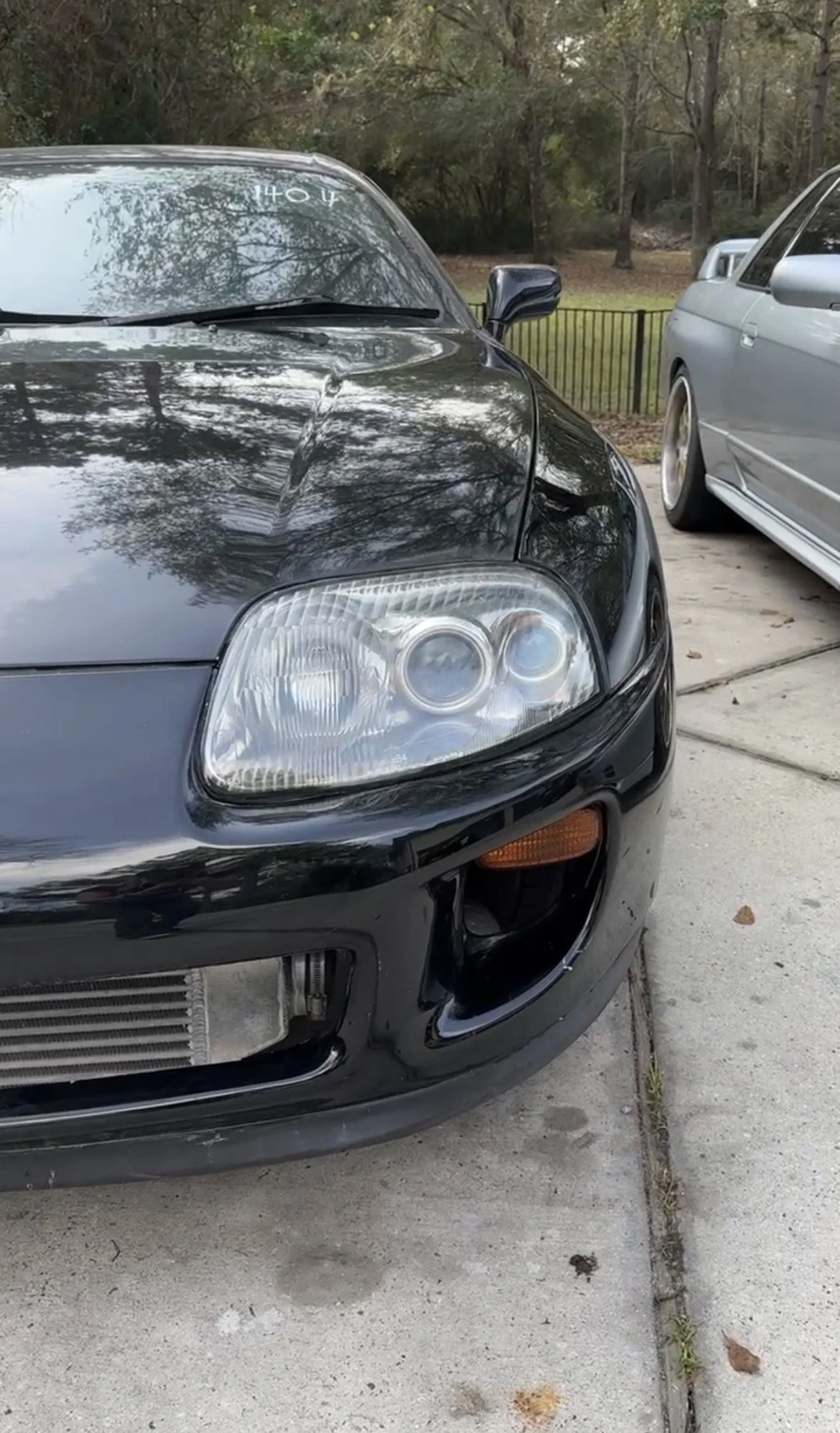 JDM Classic Headlight RestoreToyota Supra
Daily-driver before & after
Book your restore
Ready to See Clearly Again?
Full wet-sand and machine polish, a real UV-resistant sealant, and a 1-year workmanship warranty. Tell us about your car and we'll send a free, no-pressure quote — usually the same day.