
Ceramic Coating:
The Definitive Guide
Everything you need to know before you coat your car — what it is, how it compares to wax and PPF, how long it lasts, what it costs, and how the pros apply it. Written by the Houston studio that lives and breathes it.
What Is Ceramic Coating?
Ceramic coating is an advanced liquid polymer that's hand-applied to your paint, where it bonds to the clear coat and cures into a hard, slick, protective layer. Unlike wax or sealant, which sit on top and wear off, a ceramic coating becomes semi-permanent — it doesn't wash away, and it won't be reapplied every few months.
A bond, not a topper
The coating cross-links with your clear coat at a molecular level, forming a single hardened layer instead of a wipe-on film.
Hydrophobic by design
The cured surface is intensely hydrophobic, so water beads tight and rolls off — taking dirt and grime with it.
Not a substitute for PPF
A coating protects against chemical etching, UV and light scratching — it doesn't stop rock chips the way paint protection film does.
The Benefits of Ceramic Coating
Deep, glass-like gloss
The cured resin sharpens reflections and adds a wet-look depth to your paint that lasts far longer than wax or sealant.
Hydrophobic & self-cleaning
Water, mud and road grime bead up and sheet off instead of clinging to the surface — washes get faster and easier.
UV & oxidation resistant
Blocks UV rays that cause paint to fade, oxidize and lose gloss under Houston's relentless sun.
Chemical & etch protection
Shields against bird droppings, bug acid, tree sap and road grime — the everyday chemical attacks that etch bare clear coat.
Scratch & swirl resistance
A harder, slicker outer surface resists the fine wash-induced swirl marks that dull paint over time.
Ceramic Coating vs. Wax vs. Sealant vs. PPF
Four products that all promise "protection" but do very different jobs. Here's the honest breakdown.
| Ceramic Coating | Wax | Paint Sealant | PPF (Clear Bra) | |
|---|---|---|---|---|
| What it is | Bonded pro-grade coating | Natural/synthetic topper | Synthetic polymer topper | Urethane film |
| Bonds to paint | Yes — chemical bond | No — sits on top | No — sits on top | Yes — adhesive layer |
| Typical lifespan | 2–7+ years | 4–8 weeks | 3–6 months | 5–10 years |
| Hydrophobic | Very high, lasting | Moderate, fades fast | Good, fades in months | Mild (unless top-coated) |
| Rock chip / impact protection | None | None | None | Best — physical barrier |
| Gloss enhancement | Deep, glass-like | Warm, rich | Slick, moderate | Gloss or matte, subtle |
| Maintenance | Low — periodic topper | Reapply monthly | Reapply quarterly | Low — wash as normal |
The two aren't competitors — many clients run both. PPF on high-impact panels (hood, bumper, mirrors) for physical armor, plus a ceramic coating over the film and the rest of the car for gloss and easy maintenance. Ask us about layering.
Coating Packages by Longevity
Not all ceramic coatings are equal — grade and layer count drive how long the bond lasts. We install a top professional-grade ceramic coating system, tiered so you only pay for the durability you actually need.
Entry Package
Single-layer ceramic coating. Strong gloss and hydrophobics for daily drivers who want a step up from wax without the full investment. ~2-year lifespan.
Multi-Year Package
Multiple coating layers plus a reinforced base coat for extended chemical and UV resistance. The most popular choice. ~5-year lifespan.
Pro-Grade Package
Our top professional-grade multi-layer system with the hardest cured finish we offer. Built for show cars, daily-driven exotics and anyone who wants maximum longevity. 7+ year lifespan.
Swatches are illustrative. Every package includes a full written warranty and a walkthrough of exactly what's covered.
Ceramic vs Graphene: The Premium Step Up
Graphene coating is our premium tier above standard ceramic — a harder, graphene-enhanced finish with the same easy-care routine, plus better heat and static management. Toggle the tiers below to see the honest difference in hardness, water beading and price.
Water beading — standard ceramic
Water beading — graphene: tighter, denser, faster-shedding
Standard Ceramic Coating
A pro-grade coating that bonds over your clear coat for years of deep gloss, slickness, UV and chemical resistance, and easy-clean hydrophobic beading. The right call for most daily drivers.
- Lasts multiple years with proper care
- Elite gloss, slickness and depth
- Intensely hydrophobic — water beads and sheets off
- Bonds to paint, trim, glass and wheels
- Starts at $800
Graphene — Beyond Ceramic
Everything ceramic does, plus advanced graphene technology for a harder 10H finish, a deep high-gloss shine and faster heat dissipation — so fewer water spots bake in and dust grips weakly. Our top protection tier.
- Rated for over 5 years of protection
- 10H hardness — a harder cured finish
- Tighter, faster-shedding beads — fewer water spots under the Texas sun
- Anti-static finish sheds dust and pollen between washes
- High-gloss finish on paint, trim, glass & wheels
- Starts at $850
| Head to head | Standard Ceramic | Graphene (premium) |
|---|---|---|
| Starting price | From $800 | From $850 |
| Rated lifespan | Multiple years | Over 5 years |
| Cured hardness | Hard, slick finish | Rated 10H |
| Signature strength | Deepest gloss & slickness | Heat & static management |
| Surfaces protected | Paint, trim, glass & wheels | Paint, trim, glass & wheels |
| Water beading | Intense, long-lasting | Tighter, faster-shedding |
| Water-spot resistance | Strong | Better — dissipates panel heat faster |
| Dust & static | Standard | Anti-static — sheds dust between washes |
| Best for | Max gloss & slickness | Hardest finish + heat/dust control |
Graphene is an upgrade, not a different universe — it's ceramic, evolved. Both need proper prep, and neither stops rock chips (that's PPF's job). Ceramic starts at $800; graphene packages start at $850. Read the graphene guide → · See the full head-to-head →
Why Paint Correction Comes First
A ceramic coating is transparent — it locks in whatever condition your paint is in when it cures. Coat over swirls, scratches or oxidation, and you've just sealed those flaws under a hard layer for years. This is the single biggest factor in whether a coating looks incredible or merely okay.
Correction removes the flaws
Machine polishing cuts back fine swirl marks, wash-induced scratches, water spots and light oxidation before the coating ever touches the panel.
The coating locks in the result
Whatever gloss and clarity the paint has after correction is what you'll see — and what you'll be protecting — for the life of the coating.
If your paint has visible swirls or scratches, we'll always recommend a correction pass before coating. It costs more up front, but coating over unfixed paint just means paying to protect flaws you'll be looking at for years. See our paint correction guide →
Where the Coating Actually Sits
Your paint is a stack of layers, and a ceramic coating becomes the new top of that stack. Everything below it is factory — the ceramic is the ultra-hard, transparent shield we add over all of it.
A hard, glossy coating bonds to your clear coat — hydrophobic, UV-blocking, years of gloss from one hand-applied layer.
The Application Process
A great ceramic coating is 90% preparation. Here's exactly how we do it — the difference between a coating that bonds properly and one that streaks, high-spots or fails early.
Wash & Decontaminate
pH-neutral hand wash, iron remover and clay bar to strip embedded contaminants that would otherwise trap under the coating.
Paint Correction
Machine polishing removes swirls, light scratches and oxidation as needed — the step that determines your final gloss level.
Panel Wipe-Down
An IPA (isopropyl alcohol) panel wipe strips any polishing oils or residue so the coating bonds directly to bare clear coat.
Coating Application
The coating is hand-applied panel by panel with a suede applicator, worked in thin even passes and leveled before it starts to flash.
Cure & IR Cure
Infrared curing lamps accelerate cross-linking so the coating hardens properly, rather than relying on ambient air cure alone.
Final Inspection & Walkthrough
We inspect every panel under raking light together, then walk you through the exact aftercare window before you drive it. Full jobs run 1–3 days depending on package and correction needed.
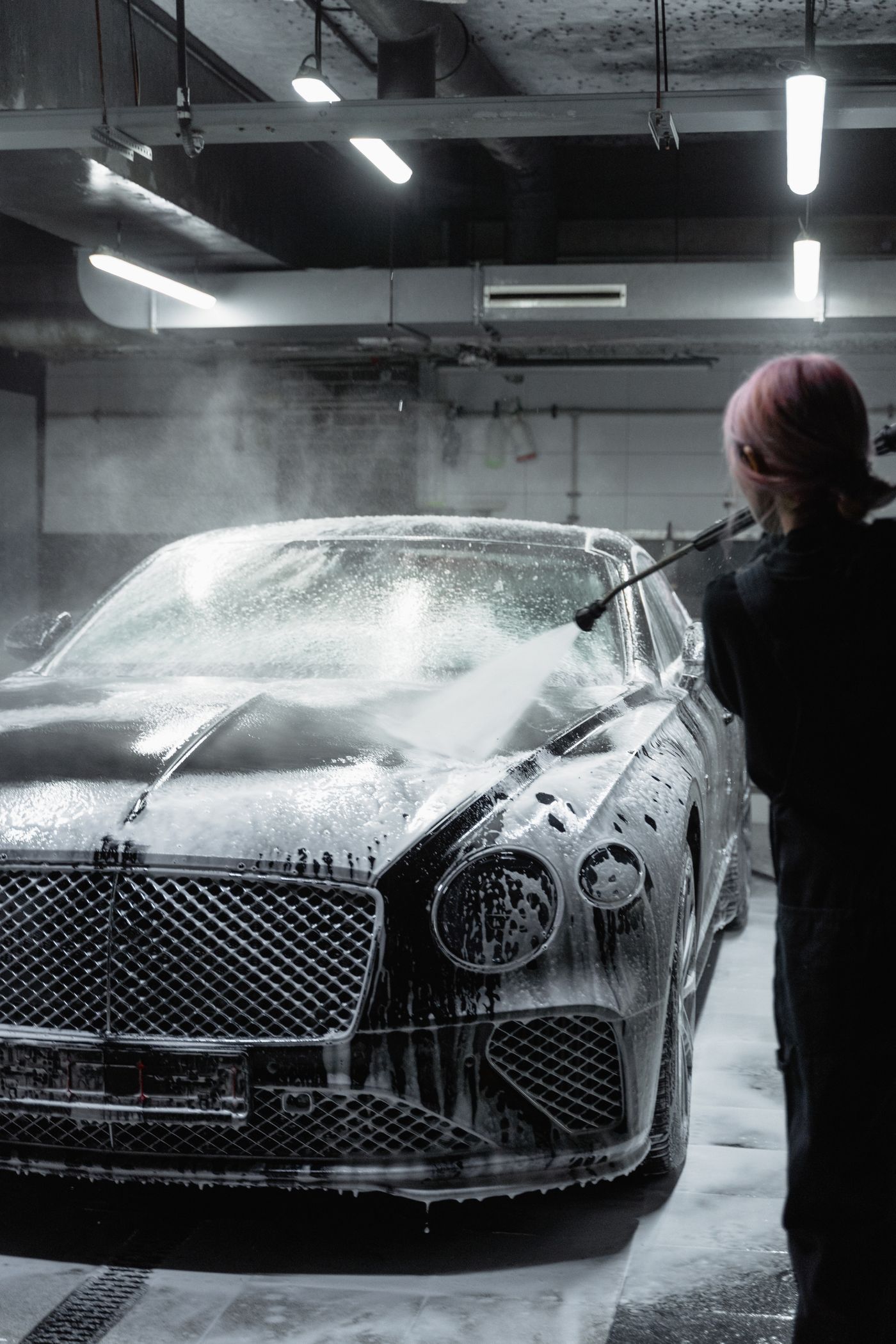
What Does Ceramic Coating Cost?
Every quote is custom — your exact price depends on a few things. Entry packages start from $800, with multi-year and pro-grade packages priced higher based on layer count and correction work required.
Package tier
Entry (~2yr) vs. multi-year (~5yr) vs. pro-grade (7+yr) — more layers and better resin cost more.
Correction needed
Light polish vs. multi-stage correction to remove swirls and scratches before coating.
Vehicle size
Sedan vs. SUV vs. truck — more surface area means more material and labor.
Add-ons
Wheels, calipers, glass and trim coating can be bundled in alongside the paint.
How Long Does Ceramic Coating Last?
Ceramic coating longevity runs 2 to 7+ years depending on the package you choose — longer with a garage-kept car and consistent care. What actually determines lifespan:
Package & layers
Entry, multi-year and pro-grade systems are built with different layer counts and resin grades — more layers, longer bond life.
Sun & environment
Houston UV and heat are tough on any coating; shaded parking and regular washing extend the bond.
Wash habits
pH-neutral soap and gentle technique preserve the coating; harsh chemicals and automatic brush washes shorten it.
Every Spec'd Studios ceramic coating installation is backed by a 1-year workmanship warranty. Product (coating) warranty varies by brand and package tier — we'll confirm the exact coverage in writing for the system you choose.
Ceramic Coating Aftercare, Simplified
Wait to wash
Give the coating roughly 7 days to fully cure before the first wash or any water contact.
pH-neutral soap only
Harsh degreasers and dish soap strip the coating's hydrophobic properties over time.
Hand wash preferred
Skip automatic brush washes — soft two-bucket hand washing preserves the cured surface longest.
Use a topper
A periodic spray topper or booster refreshes hydrophobics and gloss between full services.
Ceramic Coating FAQ
What does ceramic coating actually do?+
It forms a hard, bonded coating over your clear coat that adds deep gloss, slickness, strong hydrophobic water-beading, and resistance to UV fade, oxidation, chemical etching and light scratching — all longer-lasting than wax or sealant.
How long does ceramic coating last?+
Anywhere from 2 to 7+ years depending on the package. Entry packages run around 2 years, multi-year packages around 5 years, and our pro-grade system is rated 7+ years with proper care.
How much does ceramic coating cost in Houston?+
Packages at Spec'd Studios start from $800. Final pricing depends on the package tier, how much paint correction is needed, and vehicle size. Get a free custom quote.
Does ceramic coating stop rock chips or scratches?+
No. A ceramic coating is a hard, thin chemical layer — it improves scratch resistance against fine swirling but won't stop rock chips or deep scratches the way paint protection film (PPF) does. Many clients run PPF on high-impact panels plus ceramic over the whole car.
Do I need paint correction before coating?+
If your paint has visible swirls, scratches or oxidation, yes — a coating is transparent and will lock in whatever condition the paint is in when it cures. We always inspect and recommend correction when needed before quoting a coating job.
Ceramic coating vs. wax — which is better?+
A ceramic coating chemically bonds to your clear coat and lasts years; wax sits on top and wears off in 4–8 weeks. Coating costs more up front but needs far less maintenance and delivers stronger, longer-lasting gloss and protection.
Is graphene coating better than ceramic?+
Graphene coating is a ceramic coating enhanced with advanced graphene technology — the same bonded protection plus quicker heat dissipation for fewer water spots, an anti-static finish that sheds dust, a harder 10H finish, and rated protection for over 5 years. It starts at $850 (ceramic from $800); on a tighter budget a well-maintained ceramic still covers the fundamentals. Full breakdown: graphene vs ceramic.
How long does application take?+
A full coating job typically runs 1–3 days depending on the package and how much paint correction is required, including cure time before pickup.
What's the aftercare like?+
Avoid water contact for about 7 days while the coating fully cures, then wash with pH-neutral soap by hand. A periodic spray topper keeps hydrophobics and gloss refreshed between full services.
Is ceramic coating worth it?+
For most daily-driven and enthusiast vehicles, yes — it dramatically cuts wash time and effort, keeps paint looking newer longer, and protects against Houston's sun and daily grime for years on a single application.
What warranty comes with the coating?+
Every Spec'd Studios installation is backed by a 1-year workmanship warranty. Product warranty varies by brand and package tier — we'll confirm exact coverage in writing before you book.
Recent Ceramic Coating Work in Houston
Fresh ceramic coating installs out of our EaDo, Houston shop. New work is being photographed — check back soon.
Ready to Spec Your Ride?
A top professional-grade ceramic coating system, obsessive prep, and a 1-year workmanship warranty. Tell us about your car and we'll send a free, no-pressure quote — usually the same day.
More Spec'd Studios Guides
Vehicle Wraps: The Definitive Guide
Read → ProtectionPaint Protection Film (PPF), Explained
Read → PremiumGraphene Coating: Beyond Ceramic
Read → ComfortWindow Tint: The Definitive Guide
Read → PrepPaint Correction, Explained
Read → DetailHeadlight Restoration Guide
Read → DetailWheel Repair, Explained
Read → BusinessCommercial & Fleet Wraps
Read →Ceramic Coating Across Greater Houston
The same pro-grade coating and prep standard, wherever you park. See ceramic coating details for your area: