
Paint Correction:
The Definitive Guide
Everything you need to know before you correct your paint — what it actually removes, how single-stage compares to multi-stage, the real process, cost factors and aftercare. Written by the Houston studio that lives and breathes it.
What Is Paint Correction?
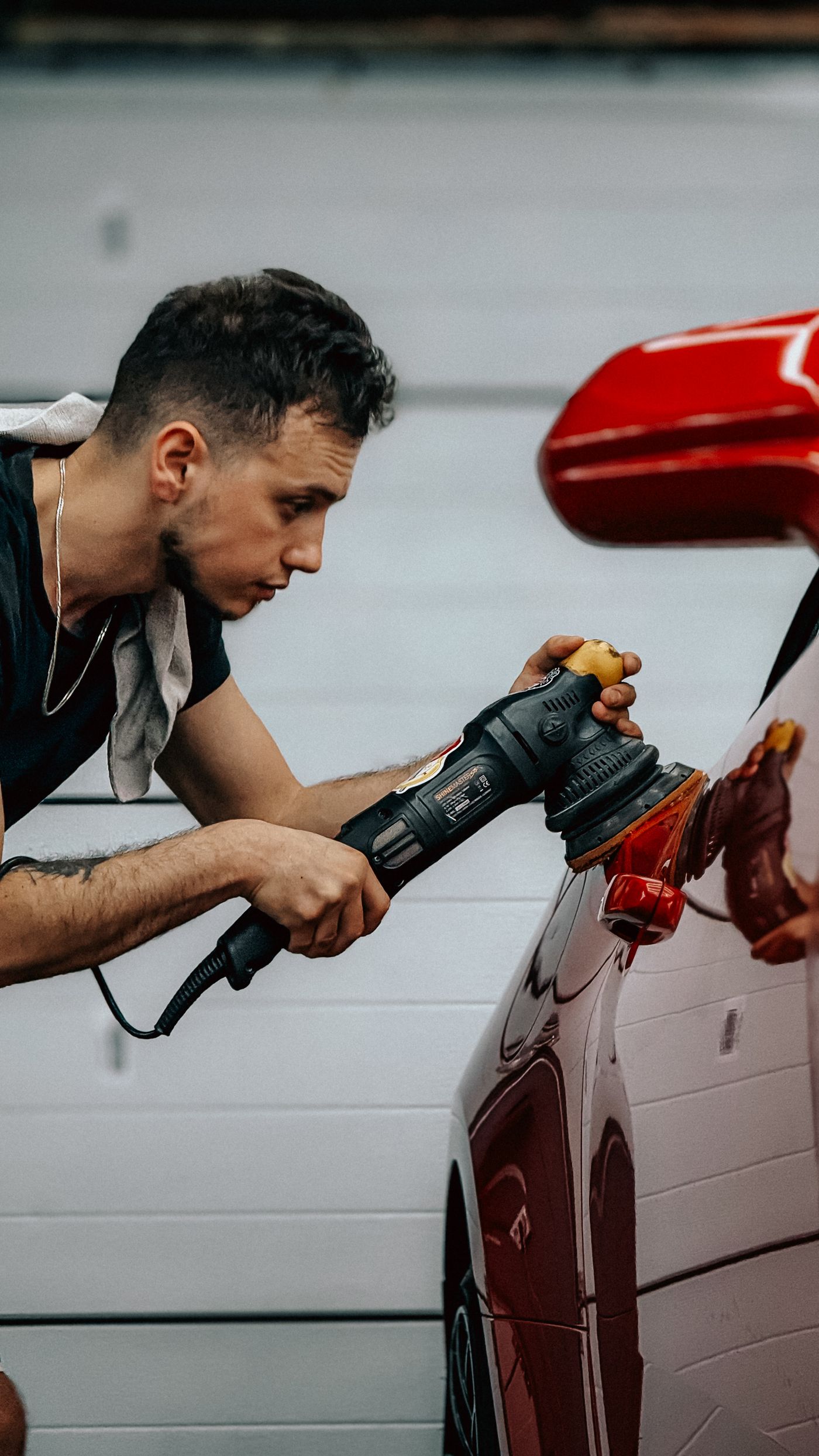
Paint correction is a multi-step machine polishing process that levels microscopic defects out of your clear coat — swirl marks, scratches, oxidation, water spots — to restore the paint's true gloss, depth and clarity. It's not a coating, a wax or a spray. It's mechanical abrasion, done in controlled stages, that physically removes a thin layer of clear coat until the surface is optically flat again.
A process, not a product
Correction is machine work — cutting, polishing and refining pads paired with compounds, run in passes across every panel. There's no shortcut product that replicates it.
Corrective, not additive
Unlike a coating or wax that sits on top, correction removes material — a controlled amount of clear coat — to eliminate the defect itself, not just mask it.
The foundation step
Correction is what a ceramic coating or ceiling wax actually locks in. Sealing swirls under a coating just makes them permanently glossy swirls.
The Benefits of Paint Correction
Removes swirls & holograms
The fine circular scratching from years of automatic car washes and improper drying — gone, not hidden. Paint reads clear again under direct sun.
Restores depth & clarity
Flattening the clear coat means light reflects evenly instead of scattering off thousands of micro-scratches — the "wet look" people chase is optical physics, not a product.
Preps for ceramic or PPF
Coatings and film bond to and show off whatever is underneath. Correcting first means you're sealing in flawless paint, not flaws.
Boosts resale value
Corrected, glossy paint reads as well-maintained. It's one of the highest-ROI details you can do before selling or trading in.
True color, not haze
Oxidized or swirled paint looks dull and slightly hazy even when clean. Correction brings back the actual factory color and depth.
What Does Paint Correction Remove?
"Defects" is a catch-all — here's what's actually living in your clear coat, and how correction addresses each one.
Swirl marks
Fine circular scratches from washing, mostly caused by dirty towels, automatic washes and improper drying technique. The most common defect we see.
Spider-webbing
Dense clusters of overlapping fine scratches, usually from years of the same poor wash habits compounding on high-touch panels like the hood and trunk.
Light scratches
Shallow scratches that catch a fingernail lightly or not at all — from branches, car washes, or careless contact — sitting entirely within the clear coat.
Oxidation
Dulling and chalky haze where the clear coat has broken down from UV exposure, common on Houston's sun-baked horizontal panels — hood, roof, trunk.
Water spots
Mineral deposits etched into the clear coat from sprinklers or air-drying in the sun — the ones that don't wipe off because they're not on the surface, they're in it.
Buffer trails
Heavy, directional swirl patterns left by a rushed or improper machine polish job from a previous detail — ironically, one of the harder defects to fully remove.
Single-Stage vs. Multi-Stage Correction
Not every car needs the same amount of work. The right stage count depends entirely on how much clear coat defect is actually there — here's the honest breakdown.
| Single-Stage | Two-Stage | Three-Stage (Full) | |
|---|---|---|---|
| Best for | Light swirls, near-new paint | Moderate swirling, some scratches | Heavy defects, oxidation, neglected paint |
| Steps | Polish only | Compound + polish | Compound + polish + finishing/refine |
| Defect removal | ~40–60% | ~70–85% | Up to ~95%+ |
| Gloss result | Noticeable improvement | Strong improvement | Maximum achievable gloss |
| Time on the car | Shortest | Moderate | Longest — full panel-by-panel pass |
| Best paired with | Wax or sealant | Ceramic coating | Ceramic coating or PPF |
We don't guess the stage count — we measure your clear coat with a paint depth gauge and inspect defects under raking light first, then recommend the minimum stages that get you the result you want. More correction isn't automatically better; it's about removing exactly what's there.
The Stages of Correction, Visualized
Same panel, four points in the process. Correction doesn’t hide damage under product — each stage physically levels the clear coat until light stops scattering and starts reflecting.
The Paint Correction Process
Correction is 90% discipline and inspection, 10% actual buffing. Here's exactly how we do it — the difference between a true correction and a "one-step polish" that looks good for a week.
Wash & Decontamination
pH-neutral hand wash to remove loose grit before any tool touches the paint — washing over dirt is how swirls get worse, not better.
Iron & Tar Decon
Chemical iron remover pulls embedded brake dust and rail dust out of the clear coat; a tar/bug remover lifts stuck-on residue that a wash alone won't touch.
Clay Bar Treatment
A clay bar glides over the paint to physically lift bonded contaminants — overspray, industrial fallout — leaving a glass-smooth surface you can feel.
Paint Depth Measurement
A paint depth gauge checks clear coat thickness panel by panel. This tells us how much material we have to work with and how aggressive we can safely be.
Compound (Cutting Stage)
A cutting compound and firm pad remove the deepest defects first — the heavy lifting stage that levels the clear coat down to sound material.
Polish (Refining Stage)
A finer polish and softer pad remove the micro-marring left by the compound stage, building gloss and clarity back up.
Finishing / Jeweling
On multi-stage jobs, an ultra-fine finishing polish maximizes reflectivity and depth — the step that separates "corrected" from "showroom."
IPA Wipe-Down & Inspection
An isopropyl alcohol wipe strips any polishing oils so we can inspect the bare, honest result under raking light before anything gets sealed in.
What Does Paint Correction Cost?
There's no fixed price for correction, because there's no fixed amount of damage on any two cars. We inspect your paint in person — under proper lighting, with a depth gauge — before quoting, so the price matches the actual work required.
Paint condition
Light swirls vs. heavy oxidation vs. water-etched clear coat all take very different amounts of time.
Defect severity
How deep the scratching goes and how much clear coat we have to safely remove to level it out.
Vehicle size
More panels and more surface area mean more machine time, regardless of defect level.
Single vs. multi-stage
A one-step polish and a full three-stage correction are fundamentally different amounts of labor.
Why You Should Seal It After
Correction removes a thin layer of clear coat to eliminate defects — it doesn't add protection back. Left bare, that freshly leveled paint is exposed to the exact same swirls, UV and contamination that caused the damage in the first place.
Pair with ceramic coating
A ceramic coating bonds to the corrected surface, locking in the gloss and adding a hard, hydrophobic layer that resists new swirling and makes maintenance washing dramatically easier. See our ceramic coating guide →
Pair with PPF
On high-impact panels, paint protection film goes over corrected paint to physically shield it from rock chips and fresh scratching — the best defense against needing correction again. See our PPF guide →
Correcting paint and then not sealing it is like repainting a wall and leaving the window open in a dust storm. The work holds up far longer — and looks far better, far longer — under a coating or film.
Maintaining Corrected Paint
Hand wash only
Skip automatic brush washes — they're the #1 cause of the swirling you just paid to remove.
Two-bucket method
Separate rinse and wash buckets (plus a grit guard) keep dirt from grinding back into the paint on your wash mitt.
Clean, soft towels
Microfiber only, and never reuse a towel that's touched the ground or a dirty panel.
Top up protection
Whatever you sealed with — wax, sealant or ceramic — follow the maintenance schedule to keep the corrected finish defended.
Paint Correction FAQ
What exactly is paint correction?+
A multi-step machine polishing process that removes microscopic defects — swirls, scratches, oxidation, water spots — from the clear coat to restore true gloss and clarity. It's mechanical abrasion in controlled stages, not a coating or a product you spray on.
How much does paint correction cost in Houston?+
There's no fixed price — every quote is custom. Cost depends on paint condition, how severe the defects are, vehicle size, and whether single-stage or multi-stage correction is needed. We inspect your paint in person before quoting.
What's the difference between single-stage and multi-stage correction?+
Single-stage is a polish-only pass best for light swirls on near-new paint, removing roughly 40–60% of defects. Multi-stage adds a cutting compound step (and often a finishing/refine step), removing up to 95%+ of defects on more heavily marked paint.
Will paint correction remove all my scratches?+
It removes swirls, holograms, oxidation, water spots and light-to-moderate scratches that sit within the clear coat. Deep scratches that have cut through the clear coat into the base color or primer can't be corrected — those need touch-up or a respray.
Does paint correction remove clear coat?+
Yes, intentionally — a thin, controlled amount. That's why we measure clear coat thickness with a paint depth gauge before working, so we know exactly how much material is safely available to remove.
How long does paint correction take?+
It depends on paint condition and stage count — a single-stage polish on lightly swirled paint takes far less time than a full three-stage correction on oxidized, neglected paint. We'll give you a time estimate with your quote.
Should I get ceramic coating or PPF after correction?+
Yes, strongly recommended. Correction removes defects but doesn't add protection — sealing the corrected paint under a ceramic coating or paint protection film locks in the gloss and defends it from the same damage happening again.
Can paint correction be done on any car?+
Most factory clear coats can be corrected safely. Cars with very thin clear coat, prior heavy polishing, or an aftermarket repaint need extra caution — we check clear coat depth first and will tell you honestly if a panel can't take further correction.
Is paint correction the same as buffing or waxing?+
No. Waxing and sealants sit on top of the paint and don't remove defects — they can even fill and temporarily hide swirls. Correction is machine-abraded in stages to physically remove the defect from the clear coat itself.
How often does paint need to be corrected?+
A properly sealed, well-maintained correction (hand washing, two-bucket method, no automatic car washes) can hold up for years. Without protection or with poor wash habits, new swirling can start building again much sooner.
Recent Paint Correction Work in Houston
Fresh paint correction work out of our EaDo, Houston shop. New work is being photographed — check back soon.
Ready to Spec Your Ride?
Paint depth measured before we touch a panel, obsessive multi-stage technique, and a 1-year workmanship warranty. Tell us about your car and we'll send a free, no-pressure quote — usually the same day.