
Windshield PPF:
The Definitive Guide
Everything you need to know before you armor your glass — how windshield protection film stops rock chips and star cracks, what it does (and doesn’t) touch on your sensors, how long it lasts and how it’s installed. Written by the Houston studio that installs it.
What Is Windshield PPF?
Windshield PPF is an optically clear, thick urethane film professionally applied over the outside of your windshield. It works like a clear bra for your glass — an invisible, sacrificial layer that absorbs the energy from rock chips, gravel and road debris so the impact hits the film instead of the glass, and the windshield underneath doesn’t chip or crack. When it’s taken its beating, you peel it and replace the film — not the whole windshield.
Optically clear
Engineered for zero visual distortion — you look straight through it. A correct install disappears; you get the protection without seeing the film.
Sacrificial by design
The film is meant to take the hit. Chips and pitting land in a replaceable layer instead of your factory glass, so a stray rock on I-10 doesn’t become a crack across your view.
Self-healing top coat
Fine wiper scratches and light surface marks in the film relax out with Houston heat — the same self-healing tech used in body PPF.
The Benefits of Windshield PPF
Stops rock chips & star cracks
The #1 reason people install it. Houston freeways throw gravel and debris straight at your glass — the film absorbs the impact so a chip or a spreading star crack never reaches the windshield.
Saves repeat windshield replacements
Modern windshields with cameras and sensors are expensive to replace and re-calibrate. Protecting the glass avoids repeat replacements plus the insurance deductibles and premium hits that follow a claim.
Self-healing & hydrophobic
Light marks heal with heat, and the hydrophobic top coat sheds rain — water beads and rolls off, improving wet-weather visibility in a Gulf Coast downpour.
Reduces glare & pitting
Sandblasted, pitted glass scatters oncoming headlights at night. Fresh film keeps the surface smooth and cuts the hazy glare that comes from years of highway pitting.
Sensor & tech friendly
Installed correctly, optical film does not block ADAS lane cameras, rain sensors, a heads-up display or your toll tag — it’s clear and thin enough to see and transmit straight through.
A single rock chip that spreads into a crack means a full windshield replacement — and on a car with a forward camera, an ADAS re-calibration on top. Windshield PPF is designed to keep that from happening in the first place, so you replace an inexpensive layer of film instead of the glass and the calibration.
Windshield PPF vs. Replacement vs. Doing Nothing
Three ways to deal with the rock-chip problem. Here’s the honest breakdown for a Houston daily driver.
| Windshield PPF | Windshield Replacement | Doing Nothing | |
|---|---|---|---|
| Upfront cost | Lower than a replacement | Full glass + possible ADAS re-calibration | $0 — until the first crack |
| Protects original glass | Yes — keeps your factory glass | No — you’ve already lost it | No |
| Stops future chips | Yes — that’s its whole job | No — new glass chips too | No |
| Insurance impact | None — no claim needed | Deductible + possible premium hit | Claim once it cracks |
| Downtime | About 1–2 hours | Half a day + calibration time | None now, more later |
| Lifespan | Typically 2–3 years, then re-film | Until the next rock | One rock away |
Windshield PPF pairs naturally with the rest of a protection build — body PPF on the front-end impact zones and a ceramic coating over the paint. Same idea, applied to the one panel you look through every day. Ask us about protecting the glass and the paint together.
What Windshield Film Takes for You
Houston highways throw gravel, construction debris and sandblasting grit at your glass every day. Here’s where it lands — and what the film does about it.
Gravel off truck tires hits low and center. The film’s urethane layer absorbs the strike so the glass underneath never chips.
The hit that becomes a spreading crack — and a full replacement. Film disperses the impact energy before the glass takes it.
Years of fine grit dull the glass and glare at night. The film takes the micro-abrasion — and gets peeled and replaced, not your windshield.
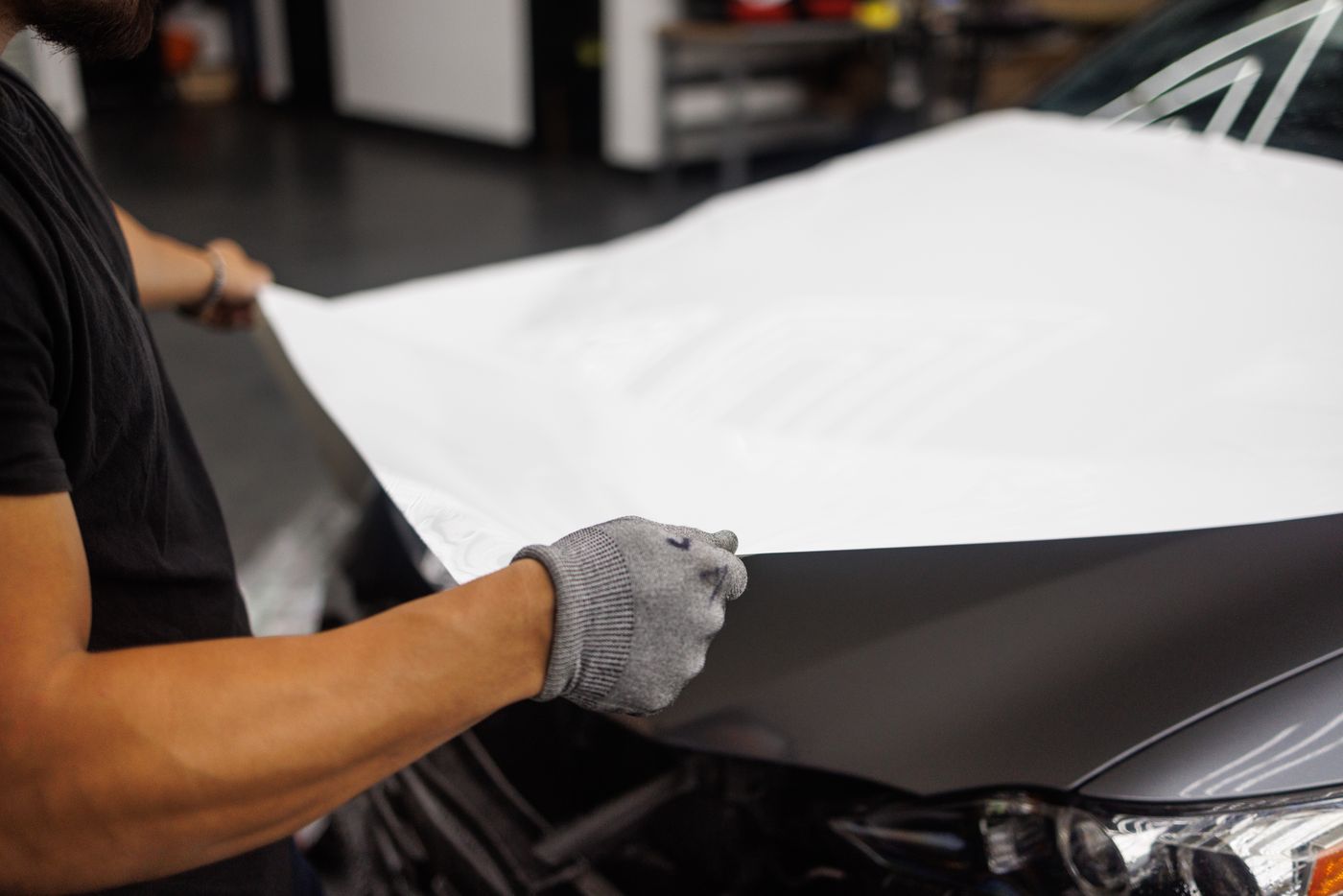
The Windshield PPF Install
A clean windshield PPF install is invisible from the driver’s seat — no haze, no edges in your sightline. Here’s exactly how we do it in the EaDo shop.
Deep Glass Decontamination & Prep
The windshield is clayed, cleaned and stripped of every trace of oil, wax, wiper residue and mineral spotting. Anything trapped under the film becomes a permanent flaw right in your line of sight, so prep is everything.
Precision-Cut Optical Film
The film is cut to your exact windshield from a pattern — not hand-trimmed on the glass — so the coverage and edges are clean and consistent, and cutouts clear your camera and sensor windows.
Wet Application & Squeegee
The film is floated onto the glass with slip solution, positioned exactly, then worked down with precision squeegees to push out every last bit of solution and trapped air for a crystal-clear result.
Heat-Form & Seal Edges
Controlled heat relaxes the film into the windshield’s curve, then every edge is sealed down so it lies flat, sheds water and won’t lift or catch a wiper.
Cure & QC
We inspect the whole windshield with you before you leave. The film needs only a short cure — most installs run about 1–2 hours and you’re safe to drive shortly after.
Plan for roughly 1–2 hours in the shop. Thanks to the short cure, you can drive off the same visit — we’ll tell you how long to wait before the first wash and heavy rain.
How Long Does Windshield PPF Last?
Windshield film lives a hard life — it’s the one panel taking wiper passes, sun and direct highway debris every day. Expect roughly 2–3 years of service depending on how and where you drive, then it’s peeled and replaced. Re-filming is far cheaper than replacing the glass underneath. What actually determines lifespan:
Highway miles
A daily commuter racking up freeway miles on I-10, 610 and the Beltway wears film faster than a weekend car — more debris, more pitting, more wiper cycles.
Sun & heat
Houston’s UV and heat load are real. Quality optical film is engineered for it, but sun exposure is one of the biggest factors in how long any windshield film stays clear.
Wiper & care habits
Worn wiper blades, running dry wipers over grit, and harsh scrapers shorten film life. Gentle habits keep it clear and get you to the longer end of the range.
Windshield film is a wear item by design — it’s meant to be sacrificed and re-applied. When it’s done its job, you re-film for a fraction of a glass replacement. Ask us about current film warranties for the specific product we’d install on your windshield — coverage varies by film, and we’ll confirm the exact terms before you book.
Windshield PPF Aftercare, Simplified
Wait to wash
Give freshly installed film about 48 hours to fully set before its first wash or heavy rain, so the edges seal down clean.
Wiper care matters
Keep wiper blades fresh and never run them dry over grit — use washer fluid so the wipers glide on a wet surface, not sandpaper.
Wash gently
Hand wash or touchless is safest. Skip stiff scrapers and abrasive pads on the film — a soft microfiber and glass-safe cleaner keep it clear.
Know when to re-film
When the film has collected enough chips, pitting or haze that visibility drops, it’s done its job — peel it and install fresh film to keep the glass protected.
Windshield PPF FAQ
Does windshield PPF affect visibility or clarity?+
No — quality windshield PPF is optically clear and engineered for zero visual distortion. Installed correctly, you look straight through it and can’t tell it’s there. If anything, the hydrophobic top coat can improve wet-weather visibility by shedding rain.
Will it interfere with my rain sensor, lane camera or HUD?+
Installed correctly, no. The film is thin and optically clear, so ADAS lane cameras, rain sensors, a heads-up display and toll tags read straight through it. We account for camera and sensor windows during a precise install so nothing is blocked.
How long does windshield PPF last?+
Typically about 2–3 years, depending on your highway miles, sun exposure and wiper habits — then it’s peeled and replaced. It’s a sacrificial layer, so it’s meant to wear over time and be re-applied for a fraction of the cost of new glass.
Is it cheaper than replacing my windshield?+
Re-filming is far cheaper than replacing the glass. A modern windshield with a forward camera can also need an ADAS re-calibration after replacement, which adds cost. The film is designed to prevent that replacement in the first place. We’ll give you an exact price for your vehicle — get a free quote.
Can you still use my wipers?+
Yes. Wipers work normally over the film. Just keep the blades fresh and use washer fluid rather than running them dry over grit, which helps both your wipers and the film last longer.
Does it stop an existing crack from spreading?+
Windshield PPF is preventative — it protects healthy glass from new chips and cracks. It is not a repair for glass that’s already cracked. If your windshield is already damaged, the honest move is to replace or repair the glass first, then protect the fresh windshield with film.
What about my toll tag and sticker?+
A properly installed optical film doesn’t block your toll tag — it reads through the clear film. If you have a windshield-mounted tag or registration sticker, let us know at install so we can plan placement cleanly.
How long does installation take?+
Most windshield PPF installs run about 1–2 hours at our EaDo shop, and thanks to the short cure you’re safe to drive shortly after. We’ll give you an exact timeline when you book.
Recent Glass Protection Work in Houston
Fresh windshield film installs out of our EaDo, Houston shop. New work is being photographed — check back soon.
Windshield film install
Daily-driver glass armor
Protect your glass
Ready to Armor Your Windshield?
Optical-clear film, precision-cut to your exact windshield, installed by hand in EaDo — and it won’t block your cameras, sensors or toll tag. Tell us about your car and we’ll send a free, no-pressure quote — usually the same day.